



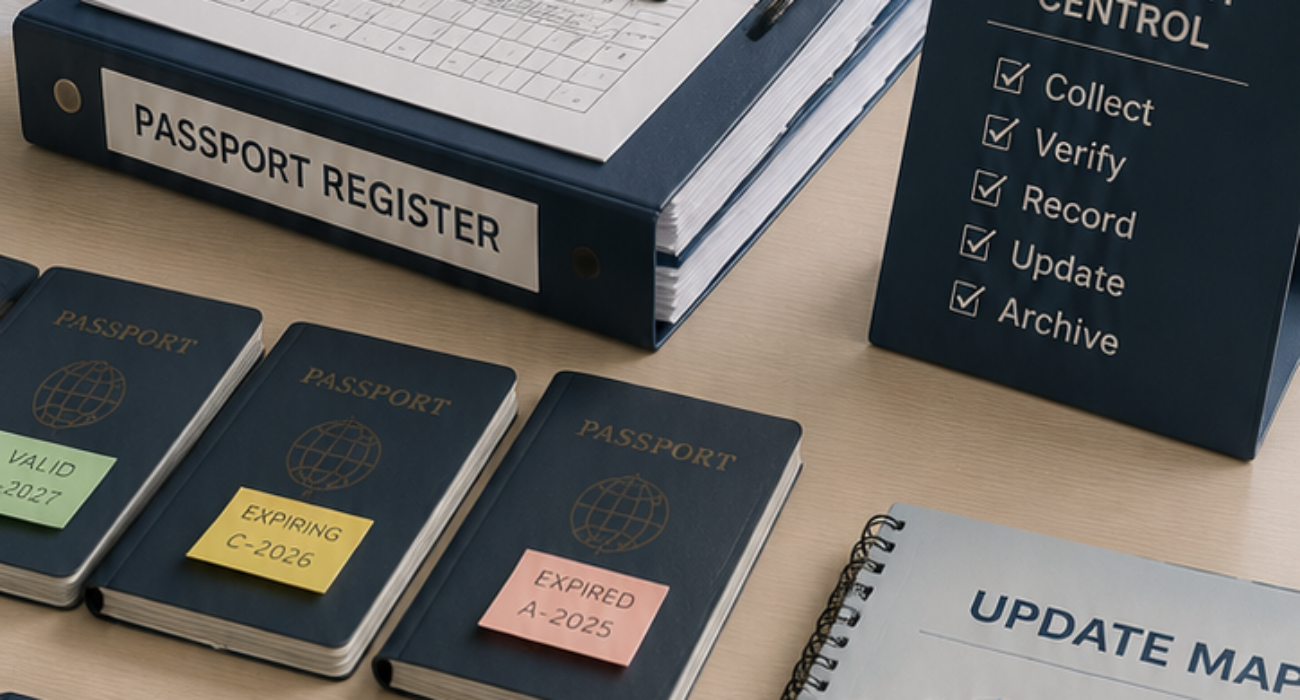
Urgent official document visa support can assist individuals and companies facing short deadlines for immigration, employment, education, investment, family, or corporate documentation. Although these matters may relate to visas or international administration, they do not always involve an upcoming holiday or ordinary travel plan.
An applicant may need to legalize a corporate document for an overseas transaction, translate a civil certificate for an immigration application, obtain supporting records for a foreign employee, or prepare evidence for an approaching permit deadline.
Urgency makes organization especially important. It should lead to faster communication and clearer priorities, not careless preparation or unrealistic promises. Government authorities, embassies, educational institutions, and other receiving organizations still determine the applicable requirements, processing periods, and final outcomes.
What Counts as a Non-Travel Document Requirement?
Non-travel services involve documents needed for an official purpose beyond tourism. The applicant may not be planning to travel immediately, but the documents can still affect legal status, employment, education, investment, or an international business process.
Common purposes include:
- Supporting a work or stay permit application
- Preparing documents for a foreign employee
- Verifying an investor’s corporate position
- Submitting academic records to an overseas institution
- Presenting a marriage or birth certificate for family immigration
- Authenticating a power of attorney for use abroad
- Translating a company resolution
- Preparing a police clearance certificate
- Supporting a professional licensing application
- Completing documentation for an overseas legal proceeding
Each purpose can require a different document route. Therefore, the process should begin with the intended use rather than with a general request to “legalize everything.”

How Urgent Official Document Visa Support Begins
A reliable urgent process starts with a rapid case assessment. The purpose is to identify the real deadline, the receiving institution, and the minimum acceptable submission package.
The assessment should answer several questions:
- What official outcome does the applicant need?
- Which organization will receive the documents?
- What is the exact submission deadline?
- Are preliminary documents accepted?
- Which records already exist?
- Are the available records current and complete?
- Does the receiving organization require originals or digital copies?
- Is a sworn translation necessary?
- Does the document require certification, legalisation, or an apostille?
- Which steps depend on government processing?
These questions reveal whether the case is genuinely urgent and which tasks can move forward immediately.
A deadline stated only as “as soon as possible” is not enough. The applicant should provide the actual date, time zone, submission method, and consequences of missing it.
Classifying Urgency Before Processing Documents
Not every urgent request has the same priority. A document team can classify the case according to its deadline and potential impact.
Critical cases
A critical case may involve an imminent permit expiration, a formal authority request, a fixed court deadline, or a company transaction that cannot proceed without a specific document.
The team should immediately verify whether the required process remains possible within the available time. If it is not, the applicant needs a realistic explanation and information about any lawful alternative offered by the receiving institution.
Time-sensitive cases
A time-sensitive case has a clear approaching deadline but still provides enough time for document preparation. These matters benefit from daily monitoring, prompt approvals, and parallel work where the procedures allow it.
For example, the applicant might collect missing pages while the team confirms translation specifications.
Priority cases without a fixed deadline
Some applicants request urgent handling because the document affects an internal company plan. The request deserves efficient coordination, but it should not displace cases involving legal expiration dates or mandatory response periods.
A priority system helps the agency allocate attention fairly and communicate realistic expectations.
The Receiving Authority Determines the Document Standard
A document can be genuine yet unsuitable for a particular application. The receiving authority decides which format, language, certification, and authentication method it will accept.
Before starting an urgent process, applicants should obtain current written requirements from the relevant institution whenever possible. A checklist may specify:
- Accepted document type
- Maximum document age
- Required language
- Original or copy requirements
- Certification standard
- Translation qualifications
- Authentication procedure
- File format and size
- Signature requirements
- Submission channel
- Applicable deadline
Visa applicants should consult the Indonesian Directorate General of Immigration’s foreign-national portal for current information about Indonesian visa and stay-permit categories. Requirements can vary according to the applicant’s purpose and selected immigration route.
An administrative consultant can help interpret a checklist and prepare documents. However, the consultant cannot change the receiving authority’s standard.
Creating a Deadline Recovery Plan
Urgent cases often begin after time has already been lost. The original document may be incomplete, an earlier submission may have been rejected, or the applicant may have misunderstood the required procedure.
A deadline recovery plan separates the remaining work into four groups:
- Tasks the applicant can complete immediately
- Tasks that require company approval
- Tasks handled by professional service providers
- Tasks controlled by government or other official institutions
The plan should identify the longest dependency first. If an official record must be reissued before it can be translated or authenticated, collecting unrelated supporting documents will not solve the main delay.
A useful recovery schedule contains:
| Task | Responsible Party | Dependency | Target Completion |
|---|---|---|---|
| Confirm receiving requirements | Applicant or company | Written instructions | Same working day |
| Check source-document completeness | Document coordinator | Full document copy | Same working day |
| Approve spelling and terminology | Document owner | Passport and company records | Before translation |
| Arrange sworn translation | Authorized translator | Final source document | Based on page count |
| Prepare authentication request | Administrative team | Eligible final document | After verification |
| Submit final package | Applicant or representative | Completed document route | Before deadline |
This structure makes responsibility visible and prevents several people from waiting for one another without clear instructions.
Verifying the Source Document
Speed cannot compensate for a defective source document. Before translation or authentication begins, the team should inspect the record for basic problems.
The review should cover:
- Complete page count
- Legible text
- Correct identity information
- Visible signatures and seals
- Issue date
- Issuing institution
- Document reference number
- Amendments or annotations
- Consistency with the passport
- Consistency with related company records
A cropped scan may remove a seal or page number. Likewise, a low-resolution photograph may be unsuitable for translation or electronic submission.
When the original contains an error, a translator or consultant should not silently correct it. The document owner may need to ask the issuing authority for an amendment or replacement.
Sworn Translation Under an Urgent Deadline
Civil, academic, employment, and corporate documents issued in another language may require a formal translation. Examples include diplomas, experience letters, marriage certificates, birth certificates, company resolutions, and powers of attorney.
Before requesting an urgent translation, the applicant should confirm:
- The required target language
- Whether all pages need translation
- The approved spelling of names
- Treatment of stamps and handwritten notes
- Required digital or printed format
- Number of copies
- Whether certification is required
- Whether translation occurs before or after authentication
Providing the final source document at the beginning reduces the chance of paying for repeated work. It also allows the translator to keep names, job titles, and company terminology consistent across related records.
Devisa Global Services offers sworn translation assistance for immigration, legal, employment, academic, and corporate documents.
A sworn translation communicates the document’s content in another language. It does not automatically verify that the original document is authentic.
Legalisation and Apostille Are Different From Translation
Applicants frequently use the terms translation, certification, legalisation, and apostille as though they mean the same thing. Each serves a separate function.
Translation changes the language in which the content can be read. Certification may confirm a copy, signature, or professional declaration, depending on the procedure. Legalisation and apostille concern the formal recognition of a document or the authority connected with its signature or seal.
An apostille may apply to eligible public documents used between jurisdictions participating in the Apostille Convention. However, eligibility depends on factors such as the document type, issuing authority, destination, and intended use.
Indonesia’s Directorate General of General Legal Administration provides the official Indonesian Apostille service. Applicants should check the current official procedure and confirm that the receiving institution accepts an apostille for the intended purpose.
Apostille processing does not replace translation when the recipient requires the document in another language.
Protecting Original Documents During Urgent Handling
Urgent cases can increase the risk of misplaced originals because documents move quickly between owners, translators, consultants, couriers, and official institutions.
A chain-of-custody record should show:
- Document name
- Owner’s name
- Number of original pages
- Date and time received
- Person who received it
- Current location
- Purpose of transfer
- Courier or delivery reference
- Date submitted
- Expected return route
- Date returned to the owner
Whenever possible, the document holder should create a complete scan before releasing the original. Protective packaging and traceable delivery are also important when the record cannot be replaced easily.
Sensitive records should only be shared with people involved in the procedure. Urgency does not justify sending passport copies, civil certificates, or company documents through uncontrolled channels.
Managing Official Requests for Additional Documents
An authority may request clarification, correction, or additional evidence after submission. The response should address the request precisely.
First, the team should record:
- Date and time of the request
- Authority or institution that issued it
- Application reference
- Requested item
- Response deadline
- Accepted submission method
- Responsible person
- Date the response was delivered
The applicant should avoid submitting unrelated material merely to make the response appear more complete. Excess documents can introduce conflicting information or distract from the requested evidence.
If a correction is necessary, the team should preserve the earlier version and record why the replacement was prepared.
What an Urgent Service Cannot Promise
Professional support can accelerate document collection, checking, translation coordination, and communication. Nevertheless, an urgent service cannot legitimately guarantee:
- Approval of a visa or permit
- Acceptance of a particular document
- Immediate government processing
- Exemption from official requirements
- Issuance by a fixed date
- Authentication of an ineligible document
- A positive decision from an embassy or authority
Applicants should be cautious when a provider claims it can bypass a formal process or influence a government decision.
A responsible provider distinguishes its professional service time from the period controlled by the relevant authority. It also separates official fees from translation, courier, and consultancy charges.
How Devisa Global Services Can Provide Administrative Support
Devisa Global Services can assist individuals and companies with non-travel documentation connected with immigration, employment, investment, and international formalities.
Support may include:
- Reviewing the intended document use
- Developing a priority checklist
- Checking document completeness
- Coordinating sworn translations
- Preparing files for legalisation or apostille procedures
- Organizing corporate and sponsor documents
- Monitoring outstanding records
- Maintaining submission and return records
- Supporting related immigration documentation
Applicants with broader formalities can review the company’s additional Indonesia formalities and compliance support. Visa-related cases may also require Indonesia visa application assistance.
Devisa Global Services is an independent private consultancy. It is not an immigration office, embassy, apostille authority, police department, or other government institution. All official verification, assessment, approval, processing, and document issuance remain under the authority of the relevant institutions.